From what I’ve seen, “testing everything” in week one usually means learning nothing well. Google Ads, Meta, and cold email launched together. Three soft experiments. Three incomplete destinations. A scoreboard nobody trusted.
Six weeks later most teams still cannot say which lane produced a meeting sales would defend. Pick the first channel from demand reality, not from a vendor menu or a competitor’s LinkedIn brag.
This is for B2B founders and GTM leads who need a first acquisition engine that produces meetings sales will defend. If you are stuck between Google Ads, Meta, and cold email, or running all three without a shared definition of success, use this before you split budget again.
When search is the right first lane
If prospects type your category, competitor, or acute problem into Google, capture that intent with B2B Google Ads and a message-matched page. High-intent search is often the cleanest first lane when volume exists and you can defend search-term hygiene.
Search rewards clarity: tight themes, honest conversions, and pages that continue the query job. It punishes soft conversion definitions and broad match theater before you have signal. If your category has thin or irrelevant search volume, forcing Google first will burn budget teaching you what you already suspected.
Start Search-first when buyers research actively, competitor and problem terms exist, and sales can handle inbound demos. Delay Search-first when the category is obscure, the offer needs education before a query forms, or you cannot yet fund a focused destination.
Brand-only Search is not a full first-channel strategy. Protect brand, but do not pretend it proves non-brand demand. I’ve seen teams celebrate brand efficiency for a quarter while non-brand themes quietly produced nothing sales would take.
When Meta or cold email should go first
If search volume is thin but the offer is sharp, Meta / Facebook Ads can create attention. Creative testing required, not a single static. Meta wins when hooks, offers, and proof produce qualified conversations without training the algorithm on junk form fills.
Meta is not cheap leads. Cheap Instant Form volume with weak qualification is an expensive way to annoy sales. Fund creative velocity. Decide Instant Forms vs landing pages deliberately. Define a qualified conversation before you scale.
Start Meta-first when you can ship creative weekly, the visual story is strong, and search is thin or branded-only. Delay Meta-first when you have zero creative capacity, the offer cannot be explained in a hook, or you plan to optimize only to soft leads with no CRM feedback.
If leadership wants Meta “because everyone is on Facebook,” that is not a demand thesis. That is a habit.
If you know the ICP list and can run deliverability-safe outbound, cold email creates conversations without waiting for SERP demand. Outbound wins when targeting and offer clarity are real, not when volume is the first KPI.
Prove a small, high-fit segment replies with quality sales will defend, then expand. Scaling a broken angle burns domains and teaches the team that silence means send more. Pair outbound with ICP before volume discipline.
Start outbound-first when accounts are nameable, ACV justifies infrastructure, and you can own deliverability and reply handling. Delay outbound-first when ICP is a debate, domains are already burned, or nobody owns positive-reply to booked-call ops. Outbound without reply handling is a newsletter with worse branding.
From what I’ve seen, outbound-first fails most often on reply handling, not on copy. The emails go out. Nobody owns the calendar. Meetings die in the inbox.
Fund the destination and the win definition
Whichever channel wins first, pair it with a focused landing page, or a deliberately chosen Instant Form path, and a definition of qualified conversation. Channel choice without conversion infrastructure wastes the test.
Message match, one primary CTA, and tracking sales will defend are not phase two. They are the test. A sharp channel that lands on a homepage scavenger hunt teaches you almost nothing useful. See landing pages for paid and outbound.
Write the win before kickoff: held meetings with ICP fit, opportunities with source, cost per qualified conversation. MQLs can exist as a stage. They should not be the only story leadership hears. If you cannot write the win, you are not ready to pick a channel. You are ready to clarify the offer.
A decision sequence that stays honest
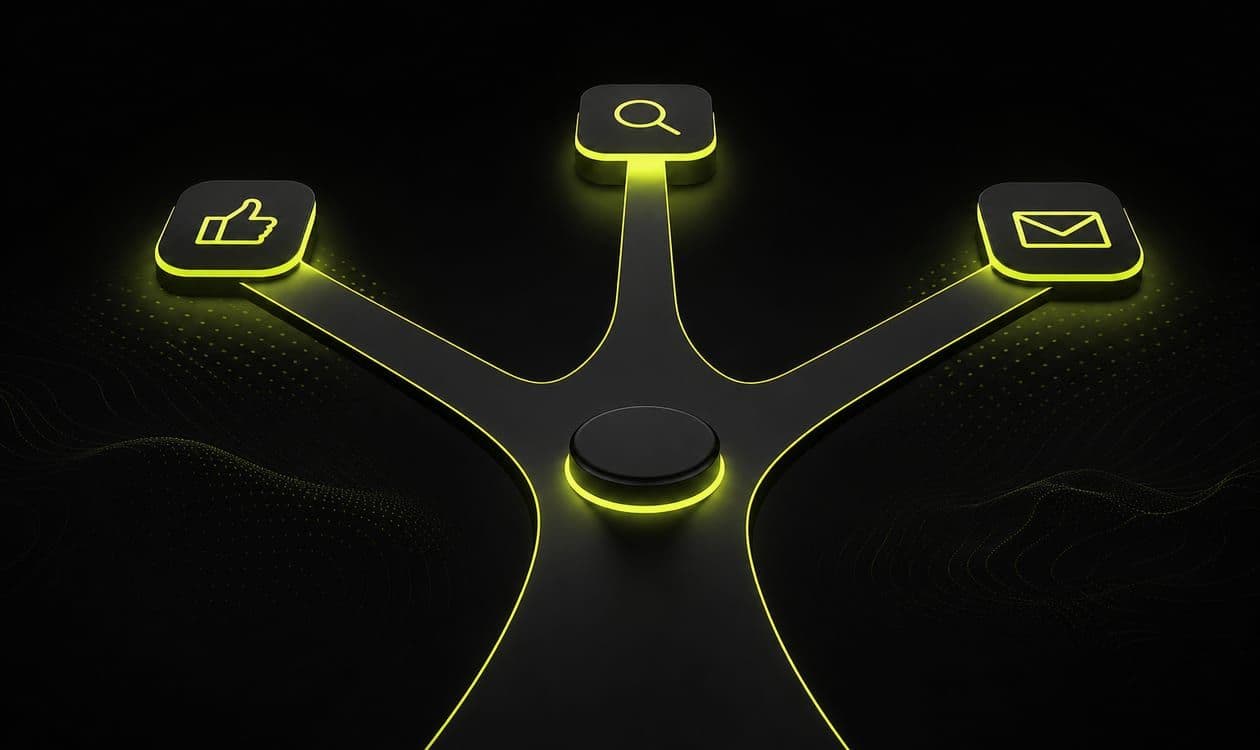
A simple order we use when two lanes look plausible:
- Can buyers already search a problem, category, or competitor you can win profitably? Prefer Search.
- If not, can you name accounts and run safe outbound with a sharp offer? Prefer cold email.
- If search is thin and lists are weak but creative and offer are strong, prefer Meta demand creation.
- If two lanes look plausible, pick one primary and one lightweight assist, not equal budget chaos.
- Fund page, routing, and scoreboard before you celebrate multi-channel.
Revisit the choice when ICP, pricing, or sales capacity changes. A first channel that worked last quarter can stall after a positioning shift. The framework stays. The answer can change.
For how channels should eventually compound as one motion, see paid + outbound + landing pages as one system. First is not only. First means learn well. Second channel earns its place after the first produces meetings you can explain.
Common traps: copying a competitor’s channel mix without their offer, proof, or sales capacity. Starting Meta and Search and outbound in the same week to cover bases. Picking the channel with the cheapest demo CPL in a pitch deck. Delaying destination work until after the first spend. Waiting for perfect attribution before starting any lane. Letting the loudest stakeholder pick the channel they personally like using.
Preference is not demand. Demand is where buyers already search, where accounts are nameable, or where creative can create attention you can convert.
Write a one-page first-channel brief before spend: ICP, offer, destination, win definition, weekly review cadence, and the pause rule. If you cannot fill that page, you are not choosing a channel yet. You are still clarifying the business.
I’m still unsure how often “cover all bases” is really fear of being wrong about one lane. It feels safer. It usually produces three half-answers instead of one clear one.
One messy observation: I’ve watched teams pick cold email first because it looked cheapest, then discover they had no list hygiene and no reply owner. The channel wasn’t wrong. The readiness was. Cost on a slide is a terrible proxy for readiness.
Unsure which first? That is exactly what a strategy call is for. Skim the services hub for how we sequence Google, Meta, landing pages, cold email, and GTM ops, or start with how we work. Book a free strategy call and bring your ICP, search reality, list readiness, and creative capacity. We will pick a first lane you can actually learn from.