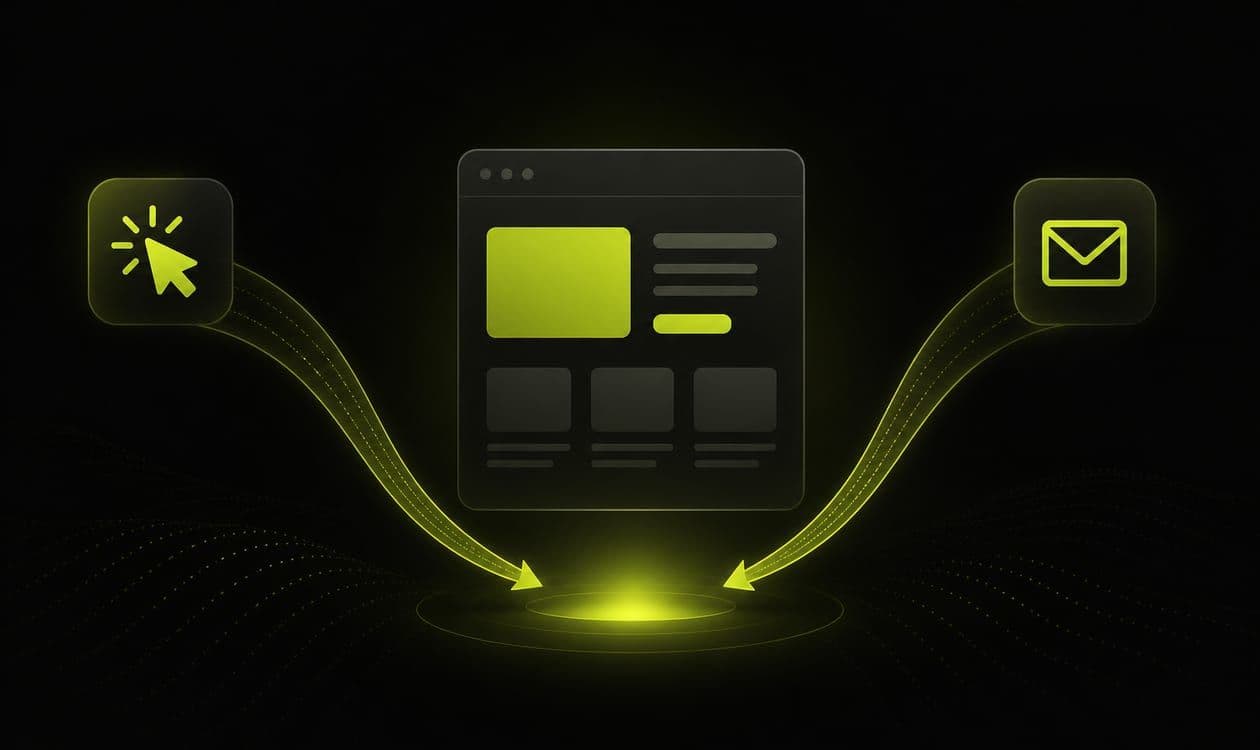
What happens when three paid campaigns and one outbound sequence all point at the homepage? CPL can look fine in the ad account while sales hears every lead open with “so… what do you guys do?”
That is the quiet failure mode. The click worked. The destination restarted the buying journey from scratch.
This is for founders, demand gen leads, and operators running Google Ads, Meta, and cold email into the same pipeline. You need pages that keep the promise of the click, whether it came from search, a feed, or an inbox.
Homepages browse. Campaign pages decide.
A homepage has many jobs: brand story, careers, product tours, blog, login. A paid or outbound click has one job, advance a single next step. Send high-intent traffic into a multi-path homepage and you invent bounce, then teach the platforms to celebrate soft engagement that never becomes a conversation.
Dedicated pages are conversion infrastructure, not a design preference. If every channel shares one vague URL, you cannot tell whether the ad, the email, or the page failed. Sales inherits people who “came from marketing” with no shared context, and every channel looks broken in the pipeline review.
Treat the destination as part of the campaign brief. Creative, offer, and page should ship as one unit. Shipping ads first and “plugging in the homepage” later is how continuity dies, and I’ve watched that sequence more times than I can count.
One page, one job
Write the job of the page before you write the headline. Each URL should advance a single action:
- Book a strategy or demo call
- Start a teardown or diagnostic
- Request a scoped proposal conversation
Secondary links are optional. Primary clarity is not. If a visitor can leave through six equal CTAs, you do not have a landing page. You have a brochure with a form on it.
If two stakeholders disagree on the CTA, the page will waffle and the algorithm will learn from confused submits. Put the decision in writing: this URL exists to book X for Y audience. Everything else is supporting evidence or it is clutter.
Match the message to the click
The headline should continue the ad or email promise. If your outbound angle was a compliance bottleneck, the page should not open with a generic brand story. If Google Ads traffic arrived on a competitor or problem theme, the first screen should speak that theme.
Message match is continuity of offer, audience, and next step. Not a logo swap. For the diagnostic checklist, see message match and CPL.
Meta traffic often arrives warmer on brand familiarity and colder on intent. Outbound arrives with a specific thread in mind. Search arrives with a query job. One shared page can still work when the core offer is identical and the angles are close. When angles diverge, split pages. When they do not, share ruthlessly and keep QA tight.
From what I’ve seen, teams split pages too late and share them too casually. The expensive mistake is forcing three different promises onto one fold because “we already have a page.”
Proof, structure, and channel reality
When you lack published case studies, use what you can defend on a call:
- Process clarity: what happens in week one
- Product or workflow screenshots
- Client logos with permission
- Specific methodology instead of adjectives
Invented ROI numbers destroy trust faster than silence. Place proof where doubt spikes, near the CTA and after the offer claim, not only in a footer. Expand the playbook in proof without fake case studies.
Above the fold: who it is for, what they get, and one primary CTA. Mid-page: problem framing in the buyer’s language, how it works, proof, and short objection handling. Keep the form or calendar close to the decision. For section anatomy, use B2B landing page structure that books demos. Pair that with fewer vs smarter form fields so you collect signals sales needs without a twelve-field wall on high-intent clicks.
If you need progressive qualification, a multi-step path can help, but steps do not fix a vague first screen. Compare shapes in multi-step funnels vs single-page LPs.
Outbound links get tapped on phones between meetings. Paid clicks bounce when pages crawl. Build light, test on mobile, and instrument the CTA. Treat cold email destinations as seriously as paid. A sharp sequence that lands on a slow, mismatched page converts replies into regret. The same page standards apply to Meta Ads when you choose landing pages over Instant Forms.
One messy observation: I’ve seen a plain, slightly ugly interim page outperform a polished homepage redesign by a wide margin, simply because the interim page continued the hook. Speed of continuity usually beats perfection of layout. I’m still unsure why teams keep waiting for “the real page” when the interim one is already doing the job.
Weekly continuity, then share or split
Instrument form submit or booking as a secondary funnel event. Optimize toward qualified meetings and opportunities once CRM feedback exists. Soft micro-conversions as primary goals recreate vanity MQL theater on the page. For the event hierarchy, see what to track on a lead-gen landing page.
Share a destination when the offer, ICP, and CTA are the same across channels and only the traffic source differs. Split when angles diverge: compliance teardown vs competitor displacement vs pricing diagnostic. Do not clone ten near-identical pages for vanity personalization.
Operational habit worth keeping: open your top three traffic sources on a phone every week. Pull the top spend ads and the highest-reply email angles. Read the first screen out loud against the creative. Spot-check three CRM records from each source and ask sales whether the conversation started where the page left off.
Log failures as page debt, not channel failure. Mismatched headlines, buried calendars, and soft forms that train volume are page debt. Bid changes will not pay that debt down.
When you share one page across channels, enforce one changelog owner. Stealth edits by three teams produce silent regressions. Document which URL each campaign hits. Orphaned UTMs and stale links are quiet budget leaks.
We design B2B landing pages and funnels as conversion infrastructure for the channels that feed them. Paid and outbound included. If traffic is leaking between click and conversation, book a free strategy call and bring one ad or email plus the URL it hits today.