What do you put on a B2B landing page when you do not have a public case library yet? Invented ROI charts are the temptation. Sales usually winces when you ask what they would say if a buyer repeated those numbers on a call.
Fake case-study numbers destroy trust faster than silence. Buyers have seen inflated ROI claims before. They have not always seen a clear process.
This is for B2B teams, especially newer agencies, product companies, and operators without a public case library, who still need landing pages that earn demos without inventing theater.
Proof you can defend on a call
Use evidence sales can repeat without wincing:
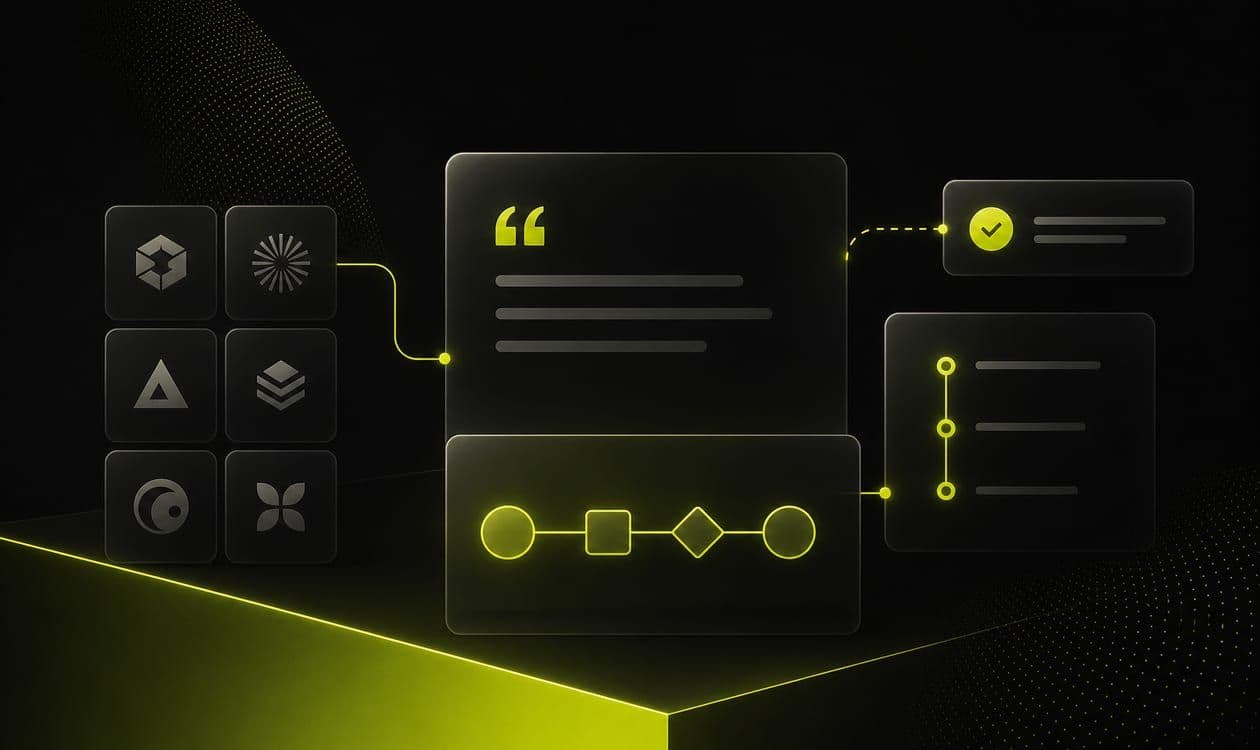
- Client logos (with permission) and named industries you serve
- Specific methodology: what you review in week one, what you deliver
- Product or workflow screenshots that show the system
- Process clarity: who you are for, and who you are not for
- Named constraints (timelines, prerequisites) that signal honesty
Permissioned logos beat invented percentages. Screenshots beat stock photography of handshakes. Methodology beats adjectives. If sales cannot repeat the line without wincing, it does not belong on the page.
“Pipeline-first Google Ads and outbound with CRM feedback” outperforms “world-class results.” Write like an operator, not a brochure. If you cannot show a public case study, show the operating system: how you qualify, what you track, how sales gets routed.
Tie proof to the offer angle. If the page books a teardown, show what a teardown includes. If it books a demo, show the workflow the demo will walk. Vague proof next to a specific CTA feels like bait. Buyers punish fiction when the sales call cannot back it up.
Place proof where doubt spikes
Near the CTA, after the offer, and wherever you ask for a meeting. Do not warehouse logos in a footer nobody reaches. Mid-page after “how it works” is where skepticism rises. Put a concrete artifact there.
Pair proof with structure so evidence supports a decision path, not a brand museum. Use B2B landing page structure that books demos. Repeat a compact proof unit near the final ask. One distant logo row is not reinforcement.
From what I’ve seen, teams often have the right artifacts sitting in Notion or a shared drive and still ship adjective-heavy pages because nobody owned the proof placement. The bottleneck is usually process, not inventory.
Honesty is a conversion feature
If you lack public case studies, say what you can prove today. “We are early on public write-ups. Here is how week one works” is stronger than a fabricated before/after chart. Honesty reduces junk form fills from people who needed a different kind of proof, and improves the conversations you do book.
Also state who you are not for. Disqualification copy is proof of judgment. It is also a sales enablement gift: SDRs inherit fewer mismatched expectations.
I’m still unsure why “early and clear” feels riskier to founders than “vague and impressive.” On calls, buyers usually punish the second one harder.
Message match and what to avoid
Proof must continue the ad or email promise. A Meta creative about creative testing paired with generic “trusted worldwide” logos is still a mismatch. Continuity rules in message match.
Paid and outbound can share proof blocks when the offer is shared. See landing pages for paid and outbound. Do not invent different ROI stories per channel. Inventing is the failure mode, not sharing. Google Ads themes and cold email angles should land on proof that belongs to that angle.
What to avoid on the page:
- Fabricated ROI, lead volumes, or “average client” stats you cannot source
- Testimonials that could belong to any vendor in your category
- Logo walls without permission or relevance to the offer
- Awards and badges that do not relate to the buyer’s risk
- Stock imagery posing as product reality
Replace each avoided item with a concrete substitute: a checklist, a redacted workflow, a week-one agenda, a screenshot with sensitive numbers removed. Boring artifacts convert better than shiny fiction.
Build a proof backlog, then keep it honest
Capture artifacts as you work: anonymized dashboards, process checklists, teardown outlines, before/after workflow diagrams with sensitive numbers removed. Ask happy clients for logo permission early. Write one honest methodology page and reuse blocks on LPs.
When a real case study lands, place it where doubt spikes. Do not assume a blog post alone fixes the demo page. Keep tracking honest so proof claims stay aligned with outcomes you measure. See what to track.
For form friction, remember proof does not replace qualification. It supports the ask. Smarter fields still matter: fewer vs smarter. Multi-step paths can reveal proof progressively, but they cannot invent credibility. See multi-step vs single-page.
The best LP proof doubles as sales collateral. A week-one agenda, a teardown scope, a redacted routing diagram, or a screenshot of the scoreboard you share with clients gives SDRs something concrete to reopen when buyers ask “who else like us have you helped?”
Train the team to point back to the page artifact instead of improvising new claims. Improvisation is how fiction sneaks in. Create a permission tracker for logos and quotes. Nothing erodes trust faster than a logo you were not allowed to use, followed by a frantic removal after legal notices.
One messy observation: some of the best-performing proof blocks I’ve seen were slightly unfinished looking. A redacted screenshot with a handwritten-style callout sometimes beat a polished marketing graphic. I don’t have a clean rule for that. Worth noticing when you’re tempted to over-design the evidence.
Quarterly, audit every proof claim on live pages with sales. Delete what you cannot defend. Refresh screenshots when the product or process changed. Stale proof is a quiet trust leak. When a stakeholder asks for a bigger number on the page, ask what sales will say when the buyer repeats it on the call. If the answer is a wince, the page needs quieter honesty, not louder proof.
We build B2B landing pages with proof that survives a skeptical sales call. Book a free strategy call if your page relies on adjectives instead of evidence. Bring the live URL and the claims sales is willing to repeat.