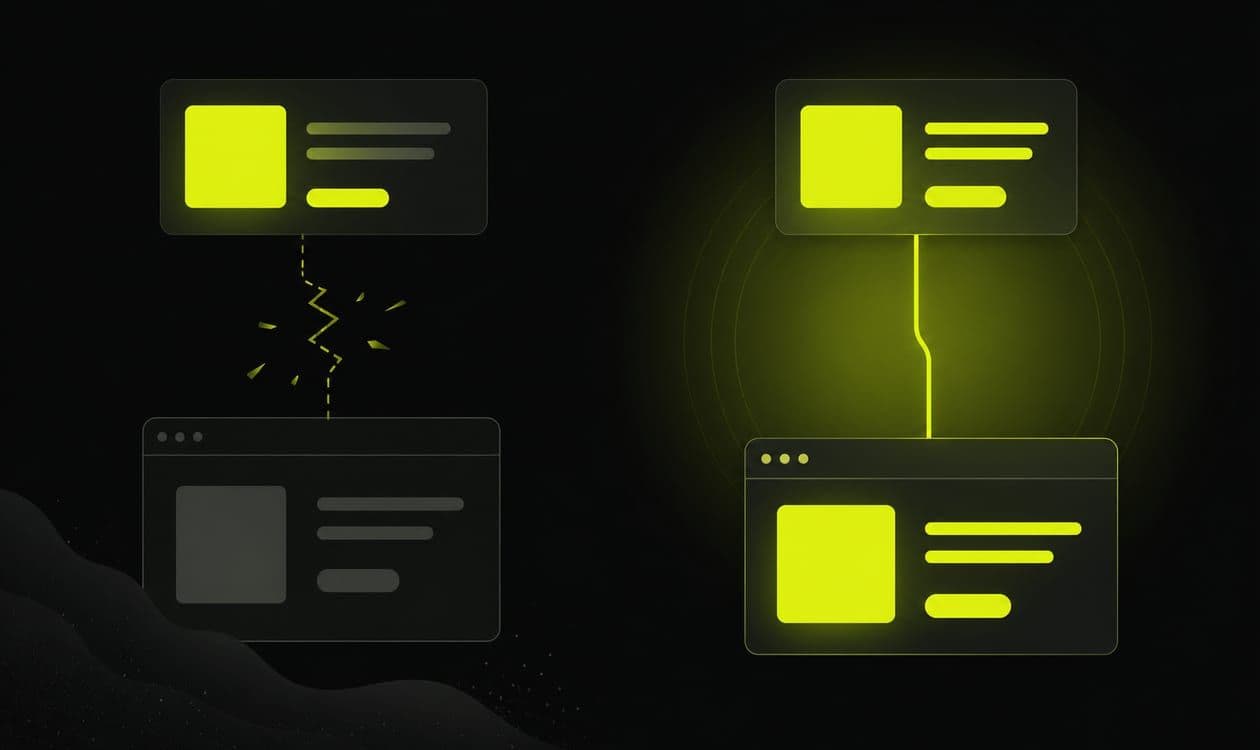
Spend was up. Leads were down. Sales said the leads did not know what the company did. Open the top spend ad and the live URL side by side and the mismatch usually shows up in one glance.
The ad sold a compliance teardown. The page opened with a brand film and a homepage slogan. Marketing blamed the channel. Sales blamed lead quality. Nobody had noticed the headline broke the contract the ad just made.
This is for operators running Google Ads or Meta Ads who need the page to finish the sentence the creative started. From what I’ve seen, most CPL spikes that look like a media problem are continuity problems wearing a media costume.
The buyer notices the break in one second
If the ad sells a specific angle and the page opens with a generic brand story, trust drops before the form loads. Intent dies at the fold. The visitor does not need a UX study to feel the mismatch. They bounce, soft-convert into the wrong offer, or fill a form with no memory of why they clicked.
That behavior shows up as rising CPL, falling opportunity rate, and SDR notes that “these leads don’t know what we do.” Often they did know. Until the page forgot.
Continuity is how you protect paid spend and outbound replies alike. It is not a copywriting nicety you fix after the creative calendar is full.
Match the words that earned the click
Headline, subhead, and primary CTA should continue the same offer angle. Keyword theme, creative hook, or outbound promise. If the ad said “audit your outbound deliverability,” the page should not say “transform your go-to-market.”
A practical continuity checklist:
- Same problem language as the ad or email
- Same audience cue (role, company type, situation)
- Same next step (book, teardown, demo). One primary
- Proof that supports that angle, not a random logo wall
Message match is not a logo swap or a brand-color overlay on a template. It is one job per page. Shared destinations across paid and outbound only work when that job is identical. If Meta creative sells a webinar and Search sells a booked demo, do not force both into one URL and call it efficiency. See landing pages for paid and outbound for when to share versus split.
Swap one variable at a time when you test. Changing hook, offer, and layout together makes message match impossible to diagnose. Keep a living sheet of ad → URL pairs for top spend. If the sheet does not exist, mismatch is already happening in the dark.
Diagnose before you blame the channel
When CPL rises, check ad → page continuity before you rewrite the whole account:
- Open the top spend ads and the live URL side by side
- Read the first screen out loud. Does it continue the ad?
- Check whether the form asks for a different conversation than the ad promised
- Confirm tracking fires on the page sales actually uses
Often the fix is a focused landing page, not another bid strategy. Bidding cannot rescue a broken promise. Neither can a broader audience, a new match type, or a creative refresh that still lands on the wrong fold.
Even with matched headlines, a homepage-shaped page restarts the journey. Use a demo-oriented structure: offer, process, proof near doubt, CTA repeated after evidence. Anatomy lives in B2B landing page structure that books demos.
Proof should reinforce the angle. If the ad is about CRM feedback loops, show the loop, not a vague “trusted by innovators” line. Honest proof beats invented case-study theater. See proof without fake case studies.
Form fields should ask for the conversation you advertised. If the ad sold a teardown and the form only asks for a newsletter email, you trained the wrong conversion. Field discipline belongs with fewer vs smarter forms.
Channel-specific mismatch patterns
Search: keyword theme says “competitor alternative,” page sells category education. Fix with theme-level pages or dynamic headline continuity that still reads like an operator wrote it, not a mail-merge that sounds robotic.
Meta: creative hook is specific. Instant Form or LP is generic. If you keep Instant Forms, the form intro must match. If you use a page, do not waste the hook on a brand film. Cold traffic needs the promise repeated, not assumed.
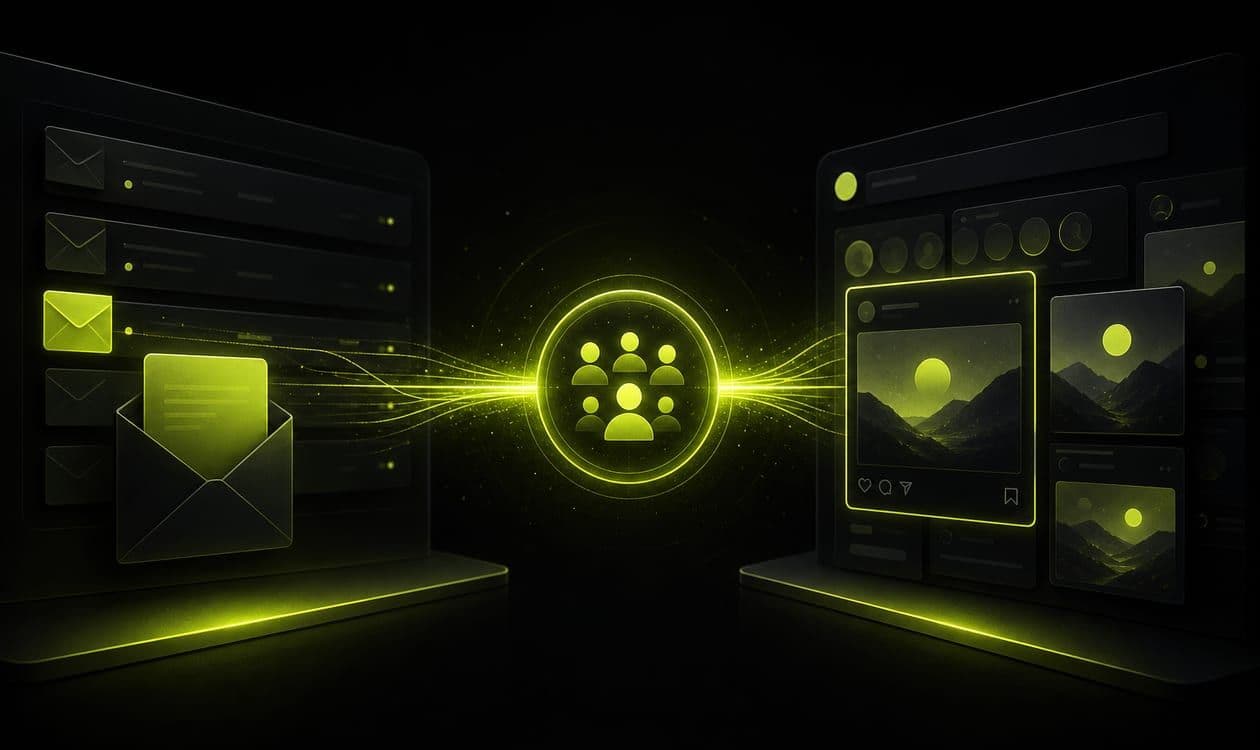
Outbound: email promises a short diagnostic. Link opens a long product tour. Reply interest dies on arrival. Treat cold email destinations with the same message-match discipline as paid. The inbox earned attention. The page should not spend it on a tour.
I’m still unsure why outbound destinations get less QA than paid ones. The reply already cost research time. Landing on a mismatched page is a particular kind of waste.
What not to do when CPL hurts
Do not widen match types or audiences first if the page contradicts the ad. Do not add soft conversions to “fix” volume while mismatch remains. Do not redesign the entire site when one focused LP would restore continuity. Do not A/B test button colors before you fix the headline contract.
Measure success as cost per qualified conversation and opportunity rate by theme, not CPL alone. A cheaper lead into a mismatched page is still expensive confusion. Track the events that matter in what to track on a lead-gen landing page.
After you restore match, expect vanity metrics to look “worse” for a stretch: fewer accidental submits, clearer conversations, better sales sentiment. Document the before/after so nobody “fixes” CPL by quietly reintroducing a generic homepage destination.
One messy observation that doesn’t tidy into a checklist: I’ve watched teams ship a near-perfect matched page and still lose trust because the form asked for a different conversation than the ad. Continuity of headline without continuity of ask is still a break. Sales hears it first.
When mismatch is obvious, do not open a six-week redesign. Ship a focused page that continues the top-spend angle: matched headline, one CTA, proof for that angle, form that asks for that conversation. Point the campaign at it. Leave the homepage alone. Then expand theme by theme for Search, hook family by hook family for Meta, sequence angle by sequence angle for outbound.
Bring sales into the war room with examples, not opinions. Five call recordings or SDR notes that start with “they thought we were selling X” beat another debate about brand voice. The page either continues the ad or it does not.
If traffic is leaking between click and conversation, we design message-matched B2B landing pages and funnels. Book a free strategy call and bring the ad + URL pair that spends the most with the weakest sales feedback.