Forty-two percent opens on touch one. Two booked calls that month. Both no-showed. The sequence crushed a vanity metric and still failed a pipeline review.
The emails were fine as writing. They asked for curiosity, a download, feedback, and a meeting depending on which touch you opened. Recipients had to decode the job. Most deleted instead.
Open rates are a diagnostic. Meetings are the product. Sequences that optimize for curiosity without a clear ask fill dashboards and empty calendars. This is for B2B marketers, founders, and SDRs who need a structure that survives a pipeline review: positive replies, booked calls, show rate.
If your reporting still leads with opens, change the scoreboard before you rewrite another touch.
One sequence, one offer job
Every campaign should advance a single next step: book a diagnostic, accept a teardown, or reply with a fit signal you can act on. Multiple CTAs dilute replies. Recipients should not decode whether you want a meeting, a download, or feedback in the same email.
Start from ICP and offer. See cold email that starts with ICP. If the offer is fuzzy, sequence craftsmanship will not save it. Write the ask you want on the calendar first, then allocate touches that support that ask without changing the destination every email.
From what I’ve seen, weak sequences change the product every email because the first ask was not sharp. Strong sequences keep the destination stable and rotate reasons: a new proof point, a tighter problem frame, a peer-relevant example, or a clearer path to yes/no.
If you sell multiple products, do not stuff them into one sequence. Run separate campaigns with separate ICPs and offers. Mixing SKUs in one cadence creates confusion and muddies which angle earned the meeting.
Give each touch a job worth sending
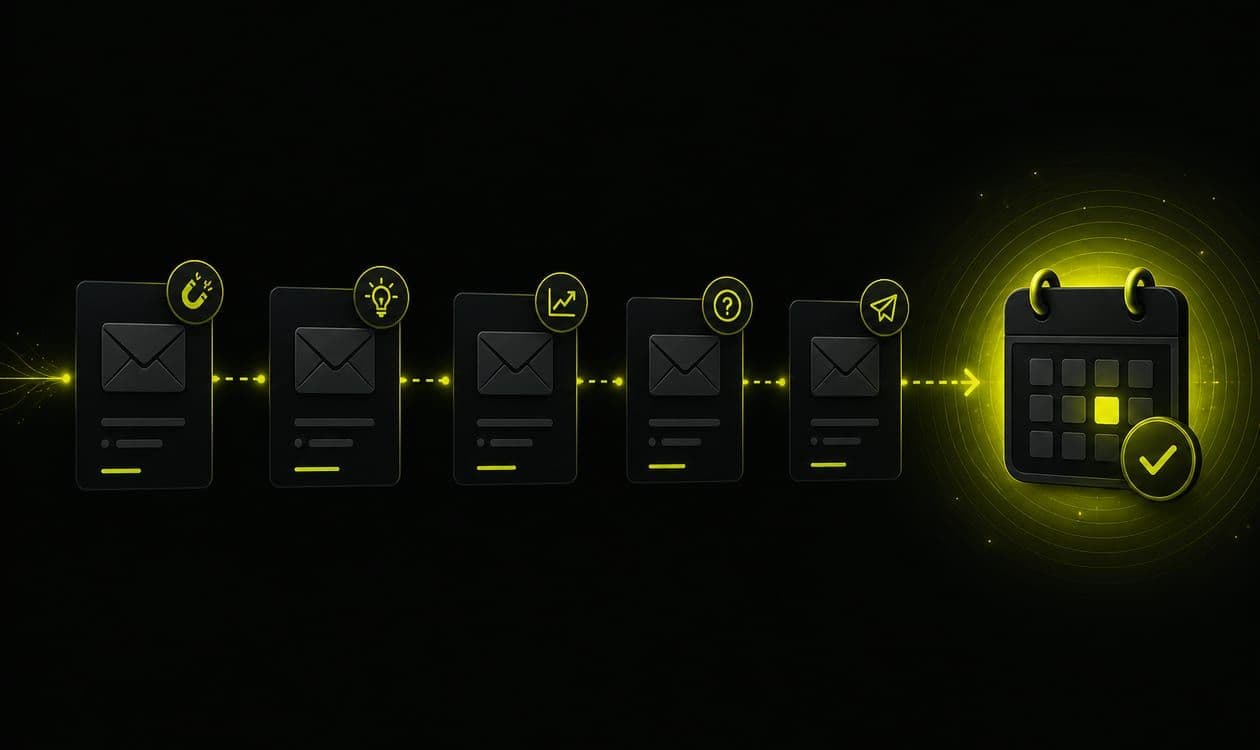
A practical B2B pattern (adapt length to your cycle and offer):
- Touch 1: relevant problem + specific offer + clear CTA
- Touch 2: proof or angle shift, same CTA. New reason, not “just checking in”
- Touch 3: alternate proof, objection pre-empt, or tighter ask. Still one destination
- Optional later touch: soft breakup or permission to close the loop
Do not send five versions of “bumping this.” Each send should earn its place with new information or a cleaner path to yes/no. If touch two cannot add a reason, you do not need touch two. You need a better offer.
Space touches so humans can reply. Daily bumps look automated and feel rude. For how long to run before you stop, see B2B sequence length.
Keep paragraphs short. Lead with relevance. Put the ask where a skimmer sees it. Avoid burying the CTA under biography. Avoid attachments on first touch unless the offer is literally an asset exchange you promised in the subject and first line.
Proof belongs as a reason to talk, not as a wall of claims. One concrete proof frame beats a paragraph of adjectives. If you lack case-study theater, use process clarity: what happens on the call, what you will look at, what they walk away with. Honest specificity outperforms invented metrics every time.
Design for reply, then for booking
Make the ask easy to accept or decline. Short questions and concrete CTAs outperform essays. When they say yes, route to a clear calendar or a human handoff, not a maze of “let me know what works” with no options.
If the CTA needs a page, pair the link with a focused landing page that continues the same promise. Message match from email to page matters the same way it does in paid: if the email sold a teardown and the page opens on a generic brand story, trust drops.
Keep links sparse. One primary path beats a footer of competing destinations. Tracking parameters should not turn a simple booking URL into something that looks like malware.
Positive reply rate, meetings booked, and show rate beat open vanity. If opens are high and meetings are not, fix offer and CTA, not subject-line gimmicks alone. Subject lines earn a fair open. They do not close the loop. Pair structure with subject lines without spam signals.
Segment results by ICP slice. A sequence that “works” on average may be carried by one industry while another segment wastes domain reputation. Kill or rewrite losers. Expand winners.
After send is still the sequence
A meeting-oriented sequence fails if positive replies sit overnight. Ownership, SLA, and a single next step after “interested” are part of the product. See the reply handling playbook. Structure that books meetings includes what happens after send, not only what ships from the sequencer.
When interest arrives, stop pitching the deck in the thread. Confirm fit briefly, offer times or one booking link, and protect momentum.
Things that usually do not belong:
- Changing the primary CTA every touch
- Attaching decks on first contact without a reason
- Fake personalization that invents facts
- Infinite follow-ups after a complete sequence and silence
- Reporting opens as the weekly win
Personalization belongs on the relevance line, trigger, role pain, proof. It is not a substitute for segment design. See personalization that scales.
Before a sequence goes live, have someone outside the author read it as a cold recipient. Is the offer obvious? Is the CTA singular? Does each touch earn its send? Does the booking path work on mobile? Are merge fields safe? QA catches the mistakes that burn the first thousand contacts.
Also QA the handoff. Send a test positive reply through your real process. If CRM, Slack, and calendar break in the test, they will break when a real buyer is waiting.
One messy observation: I’ve seen a three-touch sequence with a slightly awkward CTA outperform a polished five-touch campaign on the same list. The awkward one asked for a fifteen-minute teardown and meant it. The polished one kept offering “a quick chat if useful.” Buyers can tell the difference. I don’t have a tidy rule beyond that.
When you iterate, change one major variable at a time: offer, CTA path, or touch jobs, not everything at once. Otherwise you will not know what improved meetings. Document the version that booked conversations so the next hire does not reinvent a worse template.
Aleksifa builds B2B cold email outreach sequences for meetings, not theater. Book a free strategy call if your sequences get opens and silence. Bring a sample sequence, your offer angle, and how you define a qualified conversation.
We’ll tell you whether the structure is the leak, or whether the offer never earned a second touch.