The CPL chart in the quarterly review looked like a win. Sales brought a different slide: twelve held meetings in the same window, three in ICP, one opportunity. Nobody was lying. They were scoring different races.
Cheap Meta leads feel good in Ads Manager and bad in the CRM. If sales will not take the meetings, or the meetings never happen, your CPL is a vanity metric with a receipt. Facebook and Instagram can look efficient while the pipeline is empty.
This is for B2B teams running Meta Ads who need a shared scoreboard with sales. If marketing celebrates form fills and sales says the leads are junk, you do not have a media problem first. You have a definition problem. Fix the definition, then judge the channel.
Define the conversation both teams will defend
A qualified conversation is a held meeting or equivalent live exchange with ICP fit: title or role, company profile, and a problem you sell against. Form fills, Instant Form completes, and calendar holds that no-show are upstream or incomplete. They are diagnostics, not the scoreboard.
Write the definition in one sentence both marketing and sales will defend in a pipeline review. If two managers disagree, Meta will optimize toward whichever event you fed it, and reporting will stay political.
Align this with how you already think about measurement sales trusts. MQLs can exist as an operational stage. They should not be the only story you tell leadership.
Include edge cases explicitly. What about product-qualified trials, inbound demos from ads, or outbound replies influenced by Meta? Ambiguity here becomes attribution theater later. From what I've seen, teams skip this paragraph, then spend a quarter arguing about a cohort nobody defined.
Do the simple math, then feed quality back
The core formula stays boring on purpose:
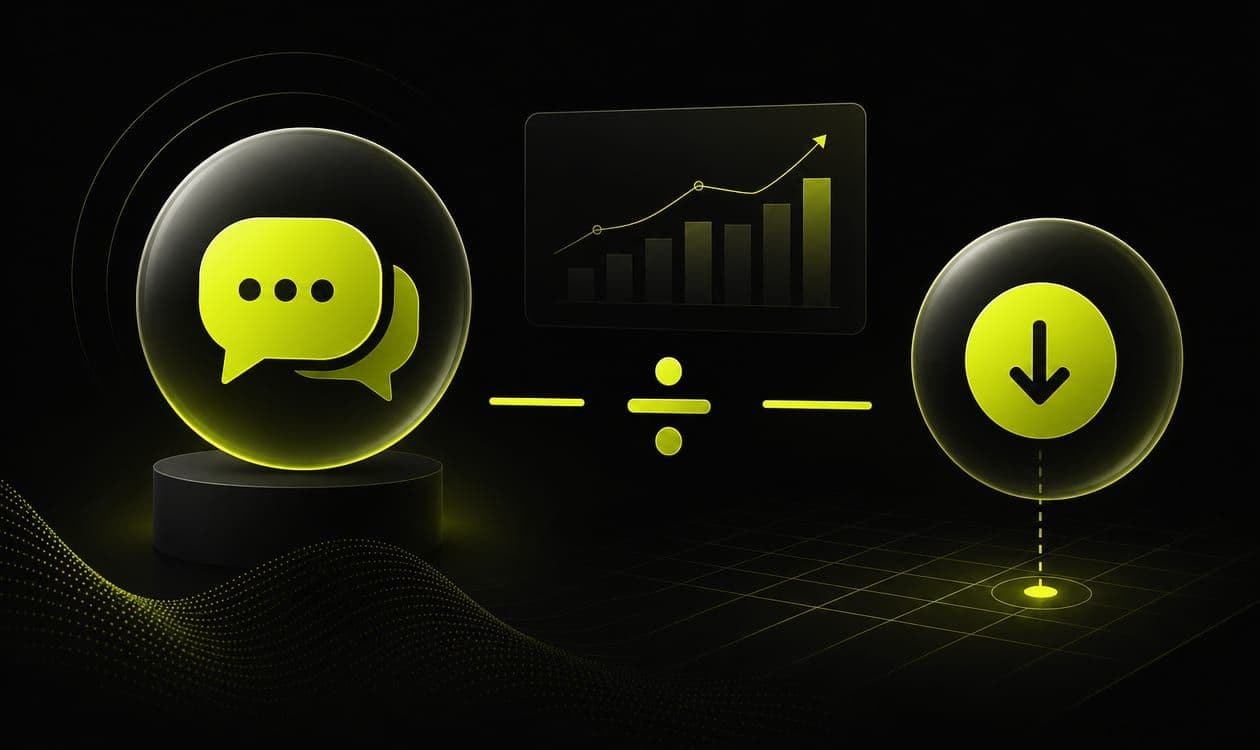
- Spend ÷ qualified conversations = cost per qualified conversation
- Track form CPL separately as a diagnostic, not a win condition
- Track booking rate and show rate so you see where the funnel breaks
- Compare Instant Forms vs site funnels on conversation quality, not only volume. See lead forms vs landing pages
Do not invent industry benchmarks as a substitute for your unit economics. Work from deal size, close rates you actually observe, and what you can afford to pay for a real conversation. If that number is uncomfortable, the fix may be offer, ICP, or channel mix, not a prettier CPL.
When volumes are low, use longer windows and qualitative sales notes alongside the ratio. Sparse data still needs honesty. It does not need fake precision. A month with three great conversations beats a month with fifty junk completes. Say that out loud in the review.
When CRM stages exist, import or otherwise prioritize higher-quality outcomes so delivery learns from pipeline, not from the softest pixel event on the page. If Meta only sees Instant Form completes, it will find more people who complete Instant Forms.
Practical loop elements:
- Capture click IDs and campaign context on lead create
- Sync stages sales trusts (qualified meeting held, opportunity created)
- Suppress or down-weight junk outcomes
- Review discrepancies when Ads Manager and CRM disagree
- Document who owns the sync when it breaks
Offline and CRM feedback is not only a Google Ads topic. Meta needs the same honesty when cycles are long. For the ops pattern, see close the loop: ads ↔ CRM reporting. When manual imports lag, GTM automation can keep the plumbing honest without replacing human judgment on the call.
Kill campaigns that win the wrong race
A campaign with a beautiful CPL and zero qualified conversations is a failure. Pause it. Reallocate to creative and offers that book real talks. Protect testing budget for hypotheses that can change conversation rate: hooks, offers, destinations. Not cosmetic refreshes.
Use creative kill rules tied to conversations, not vanity CTR. The creative testing system only works if the scoreboard is honest.
Likewise, do not scale Advantage+ on a soft conversion definition and hope quality appears later. Automation amplifies the event you choose. See Advantage+ vs controlled testing.
Wrong-race winners often hide in Instant Form campaigns with attractive CPLs and silent SDRs. Believe the calendar.
Make sales feedback part of the media review
Weekly media reviews should include qualified conversations and cost per qualified conversation, disqualification reasons, no-show patterns and follow-up SLA breaks, creative or offer notes from SDRs who sat on the calls, and destination issues like message mismatch or a confusing CTA.
Without that loop, marketing optimizes Ads Manager and sales optimizes avoidance. Shared scoreboards reduce the politics.
Destination quality belongs in the same review. A mismatched landing page inflates CPL problems that are really continuity problems.
Expect friction the first month you report this way. Someone will miss the old CPL chart. Hold the line. Explain that CPL remains visible as a diagnostic, like temperature, while cost per qualified conversation is the decision metric. Teams that keep both without hierarchy slide back into volume theater.
Also expect better creative briefs. When writers and designers know the win is a meeting sales will take, hooks get more specific, offers get sharper, and Instant Form vs landing page debates get empirical.
If your current reporting cannot produce the ratio without a heroic spreadsheet, that is a systems issue. Fix capture, CRM stages, and syncs before you declare Meta unmeasurable. Unmeasured conversations are still happening. You just cannot steer them.
One messy observation: some cohorts that look expensive on cost per qualified conversation still deserve budget when ACV is high and sales feedback is glowing. The ratio is the primary decision metric, not a religion. I've killed flights that were cheap and useless, and kept ones that were pricey and real. The calendar and the CRM note usually settle the argument faster than a benchmark deck.
Put the ratio on the first slide of every Meta review. Everything else is supporting evidence.
We optimize Meta & Facebook Ads for B2B toward conversations sales will take. Book a free strategy call if your CPL looks healthy and your calendar does not. Bring spend, form volume, meetings held, and how sales defines ICP fit.