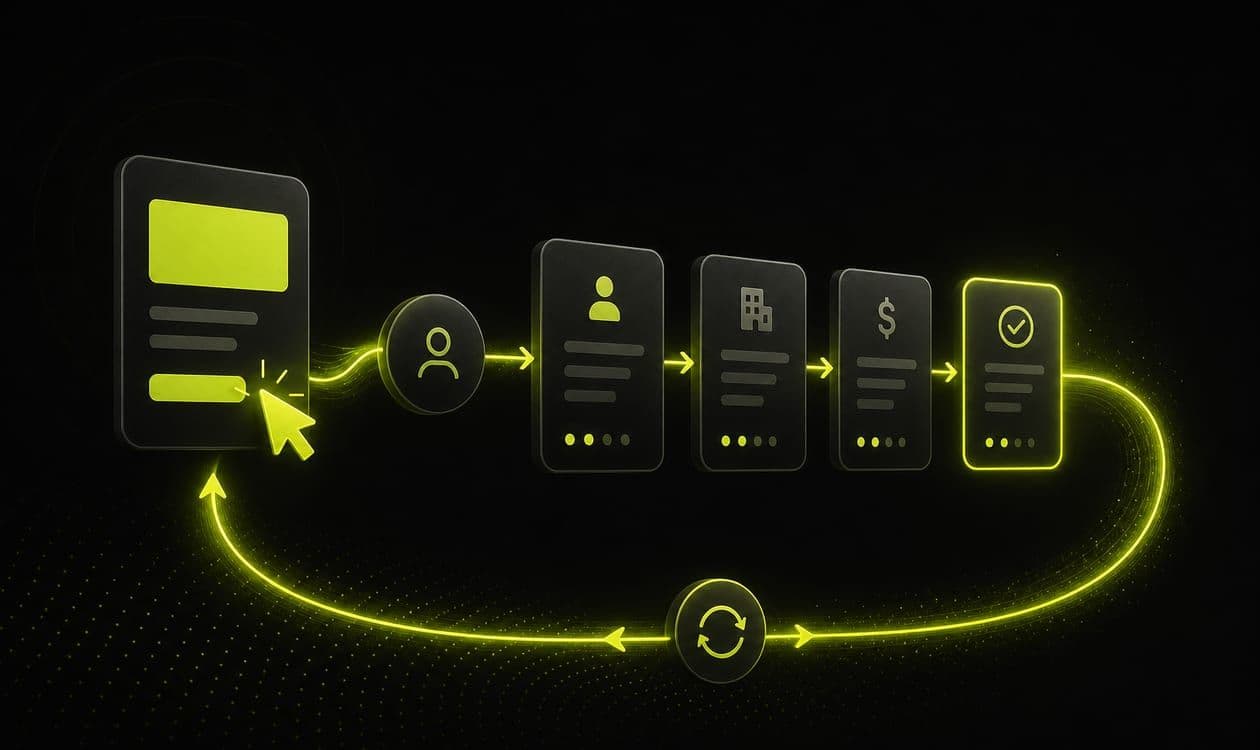
A Google Ads account can show twelve green conversion actions and still fail the only question that matters: which Search themes produced opportunities last month?
Tags fire. Enhanced Conversions is on. The thank-you page is counting. The CRM stage that mattered is not. Bidding has been learning the wrong win for two quarters.
If Google Ads only sees form fills, it will optimize for form fills. That works for e-commerce add-to-carts. It is a trap for B2B teams with multi-week cycles, high CPCs, and a sales org that rejects soft leads.
This guide is for demand gen and RevOps operators who need tracking that teaches bidding from opportunities, not vanity submits.
Form-only tracking breaks the trust loop
Search auctions reward whatever you label as success. Label a thank-you page view as the win, and Google finds more people who will hit that page. Many of them never become opportunities. Sales loses trust. Budgets get cut. The channel takes the blame for a measurement design problem.
Long cycles make the gap worse. The click happens today. Qualification happens days later. Opportunity creation happens after discovery. Without offline import, the algorithm never sees the outcomes that matter.
Build a simple hierarchy and protect it:
- Primary: opportunity created, or qualified meeting held (pick one and stick to it)
- Secondary: form submit or calendar booking, for diagnostics only
- Never primary: pageviews, scroll depth, time on site, and other micro-conversions
Secondary events are useful. They tell you where the funnel leaks. They should not outvote primary signals in Smart Bidding.
If sales cannot defend the primary event in a pipeline review, do not send it to Google as a conversion.
Wire the path like production infrastructure
The minimum honest loop looks dull on purpose:
1. Capture GCLID when the lead is created.
2. Store it on the CRM contact, lead, or opportunity with a clear field owner.
3. Import offline conversions when the record hits the trusted stage, with conversion time and value if you use value-based bidding.
4. Document who owns failures when the sync breaks.
Partial setups fail quietly. GCLID dropped on form plugins. CRM overwrites. Imports delayed past the attribution window. Stages renamed without updating the export. Treat the loop like production infrastructure, not a one-time tag install.
Landing pages and CRM must agree on what “qualified” means. Your landing page should collect what sales needs, or enrichment must fill the gap before routing and before you celebrate a conversion.
Scarcity is a feature when the signal is honest
More conversion actions is not more insight. Flooding Google with soft goals dilutes learning. Prefer fewer, higher-quality signals over a dashboard full of green checkmarks.
From what I’ve seen, these failure modes show up constantly:
- Counting every form variant as a separate primary conversion
- Bundling newsletter signups with demo requests
- Using Enhanced Conversions to inflate volume without fixing stage definitions
- Importing MQLs that sales never touches
If volume is too low for Smart Bidding stability, the answer is usually sharper intent structure and a realistic budget floor, not inventing softer conversions to feed the machine.
Once primary conversions reflect pipeline quality, expect vanity metrics to look worse for a while. CPL may rise. Volume may fall. Opportunity rate and cost per opportunity should improve if structure and offer are sound. That is the point. You are no longer buying cheap confusion.
Pair tracking with the conversion philosophy in optimize for opportunities, not form fills. Measurement without a definition still optimizes the wrong win.
Hygiene that survives the first “improvement” to the form
Operators who keep the loop healthy do boring work every week:
- Reconcile opportunities in CRM against conversions imported
- Alert on import failures the same day, not at month-end
- Exclude test leads, employees, and agency clicks
- Align timezone and conversion windows with how sales actually works
When leadership asks what Google Ads produced, answer with opportunities and pipeline, with a clear method. Not a screenshot of form fills.
Tracking fails when nobody owns it. Assign a named owner for tags, CRM fields, import jobs, and weekly reconciliation. Agencies can build the loop. Someone on your side must defend stage definitions with sales.
I’m still unsure how many teams can keep this healthy without a named RevOps owner. Fancy connectors on fuzzy stages still teach garbage. Silent broken syncs are worse than no sync.
Offline imports do not invent perfect multi-touch truth. They give Google a better training label than a thank-you page. Keep expectations adult. Last-click and data-driven models still approximate. Your job is to stop lying with form fills, not to claim omniscience.
When deals involve long nurture, still import the stage you trust as real demand. Do not wait for closed-won to be the only signal unless volume supports it. Many B2B accounts starve Smart Bidding if they only upload closed revenue. Start with equal value per qualified opportunity, then graduate to value-based bidding once the loop is stable.
Roll out in order: agree the primary stage with sales, instrument GCLID capture, import with a short backfill where windows allow, demote form submits to secondary goals, then watch opportunity CPA for several weeks before aggressive bid changes. Rushing from broken tracking to Target CPA is how teams conclude automation does not work when measurement never did.
One practical QA habit: once a month, pick five Search-sourced opportunities and walk backward to the click ID, campaign, and query theme. If you cannot reconstruct the path, the loop is theater.
One messy observation that does not tidy into a checklist: I’ve seen imperfect offline imports with a trusted stage outperform “perfect” tag installs that only counted thank-you pages. Completeness on the wrong event loses to partial honesty on the right one. I wish that were less true than it is.
Keep a simple runbook: where GCLID is captured, which CRM field stores it, which stage triggers import, and who gets paged when the job fails. If that runbook does not exist, your tracking will fail the first time someone “improves” the form.
We build B2B Google Ads programs with measurement sales can trust. If your tracking is decorative, tags firing, pipeline opaque, book a free strategy call and we will map the click-to-opportunity loop before you scale spend.