The Meta Instant Form fired at 1:14pm. By 5:20 the Zap had written the row to a sheet. Nobody owned the sheet after hours. The CRM record never got an owner. Slack never pinged. The lead booked elsewhere.
Paid media did its job. Lead ops decided whether a human ever saw it.
A lead that sits in an inbox for four hours is not a marketing win. n8n is useful when it shortens the path from ad event to human ownership. It is less useful when it becomes a fragile art project only one contractor can revive.
This is for B2B RevOps, demand gen, and founders who run Google Ads, Meta, or Instant Forms and need CRM plus Slack to behave like production infrastructure. If your routing is still a shared inbox, a spreadsheet, or a Zap nobody monitors, this is the pattern to implement.
Write the path before you open the canvas
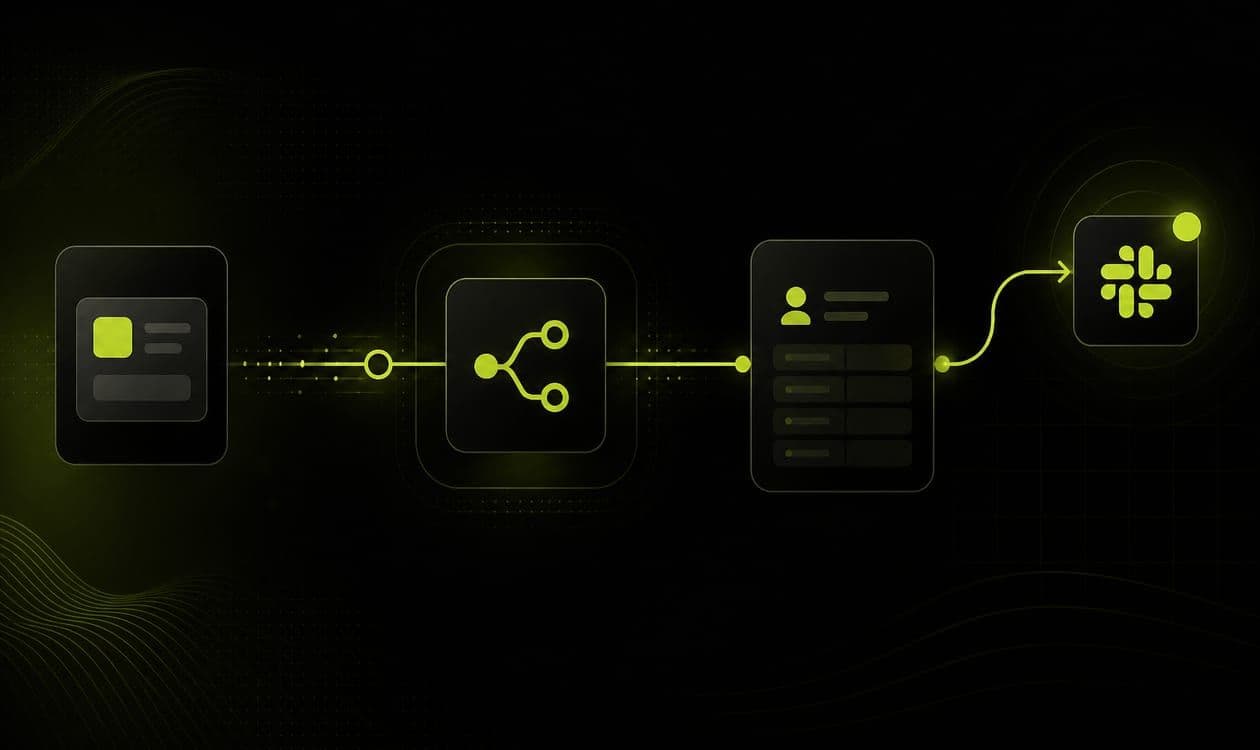
Map it on one page first:
- Form, Instant Form, or webhook fires
- Create or update the CRM contact or lead (upsert, not blind create)
- Assign owner by rules sales already agreed
- Post a Slack alert with context humans actually use
- Optional: calendar task, enrichment step, or offline conversion queue
Document who owns failures when a step breaks. Happy-path-only demos are how leads disappear on Friday night. Pair this readiness bar with when to add automation.
From what I’ve seen, teams that skip the whiteboard spend twice as long in n8n arguing about nodes that were really ownership disagreements.
Keep identity alive from the channel into the CRM
Wire destinations so identity survives. For Google Ads, persist GCLID and related click identifiers into the CRM on lead create. For Meta, keep click IDs, leadgen metadata, and UTMs intact. Instant Forms especially love to strip context if you treat the CRM as an afterthought.
Routing without attribution is busywork with a webhook. You will assign owners and still be unable to close the loop when sales wants to know which themes produced opportunities.
Capture at minimum:
- Email and company, or domain
- Source, medium, campaign, and ad identifiers you trust
- Click IDs required for offline feedback
- Offer or landing page variant if you test destinations
- Qualification fields sales will read on first touch
Blind “create contact” nodes create duplicates. Prefer upsert by email or a durable external ID. Decide what happens when the contact exists: update empty fields only, overwrite source on new campaigns, or leave ownership alone if already in-pipeline.
Document the key. If two workflows use different match logic, you will fight duplicate theater forever.
Assignment rules should be boring and written: round-robin with coverage windows, territory by region, product line by form field, or named AE for strategic accounts. Do not invent complex scoring in the same sprint as basic routing. Speed-to-lead with a clear owner usually beats a sophisticated score nobody trusts.
Slack alerts sales will actually open
A Slack message is not a dump of every form field. It is a triage card:
- Who and company
- Why they might be fit, one or two ICP signals
- Source and offer
- CRM link
- Owner tagged
If alerts feel noisy, sales mutes the channel, and you are back to silent leads. Prefer one channel with discipline over five channels with theater. Thread follow-ups when the same lead re-submits.
I won’t pretend every team gets the payload right on the first try. Before go-live, walk one sample payload with sales and ask whether they would open it. If the answer is no, fix the payload. Do not scale volume into a muted channel.
Keep the workflow boring, then make it observable
Prefer clear nodes, named steps, retries, and alerts over clever one-offs. If nobody can explain the flow on a whiteboard, it will fail quietly.
Observability basics that have held up for us:
- Log execution IDs and lead identifiers
- Retry transient API failures with backoff
- Dead-letter or hold queue for poison payloads
- Alert humans where they already look, usually Slack, not only an unused admin badge
Idempotency matters. Retries should not create three CRM records for one form fill. Same maturity bar as error handling for GTM workflows.
Optional enrichment can help route by company size or industry, or give sales context before first touch. It should not block the Slack alert while a vendor API times out. Prefer route first, enrich async, unless enrichment is required for assignment. When enrichment changes a decision, wire it carefully. When it is decorative, skip it. See when to automate lead enrichment.
Automate after humans agree, then run it like ops
If humans do not agree on qualification and ownership, n8n will accelerate chaos. Align definitions with sales, then encode them. Tooling cannot invent ICP judgment.
Common failure modes we see:
- Instant Form to email only to CRM with no owner and no Slack
- Multiple forms writing different field names into the same properties
- Test leads and agency clicks polluting assignment and reporting
- OAuth tokens that expire with no alert
- Temporary Google Sheets middle layers that become permanent debt
Sheets are fine for prototyping. They are a weak production system for B2B lead ops. Replace them with durable CRM fields once the path is proven.
Weekly for the first month: spot-check five leads end to end, form to CRM to Slack to first touch. Reconcile missing owners and missing click IDs. Ongoing: review failure alerts the same day, not at month-end. Update assignment when territory or headcount changes. Keep a short runbook for which workflow, which credentials, and who pages whom.
Also decide what after hours means. Overnight leads need either an on-call owner, a next-business-morning SLA that leadership accepts, or a holding pattern that still creates the CRM record with a clear timestamp. Ambiguous overnight rules create fake urgency and real resentment.
One messy observation: native CRM-to-ads connectors can help, and they often fail the B2B reality of branching rules, Slack payload design, multi-source forms, and offline conversion queues. n8n earns its place when lead ops is a workflow, not a single toggle. For tool tradeoffs, see Zapier vs n8n for GTM ops.
I’m still unsure whether every team needs a full dead-letter queue on day one. Some start with retries plus a loud Slack alert and add parking later. What I will not soft-pedal is silence. No alert is worse than an imperfect queue.
When outbound positive replies enter the same CRM, reuse the upsert and alert pattern. Different trigger, same ownership spine. Parallel undocumented paths are how lead ops fragments. Document the trigger list in the runbook so new forms do not invent a third philosophy.
When you add a new channel or form, extend the same pattern. Do not spawn a parallel undocumented Zap. Consistency beats cleverness.
Aleksifa builds GTM automation around ads, outbound, and CRM so leads reach people fast. Book a free strategy call if routing is still a spreadsheet. Bring one example lead that got stuck and the tools in the path today.